
Navigating Vocational Rehabilitation and Return-to-Work Planning
What is Vocational Rehabilitation?
In Canada, Vocational Rehabilitation (VR) is a comprehensive support system that helps individuals recover from injuries, illnesses, or disabilities to find, maintain, or return to employment. It includes a variety of services, such as:
Skills and interest assessments.
Career assessment and counselling.
Providing access to programs to build skills.
Job placement support.
Workplace accommodation and modification strategies.
Aid in recovery from injury and illness.
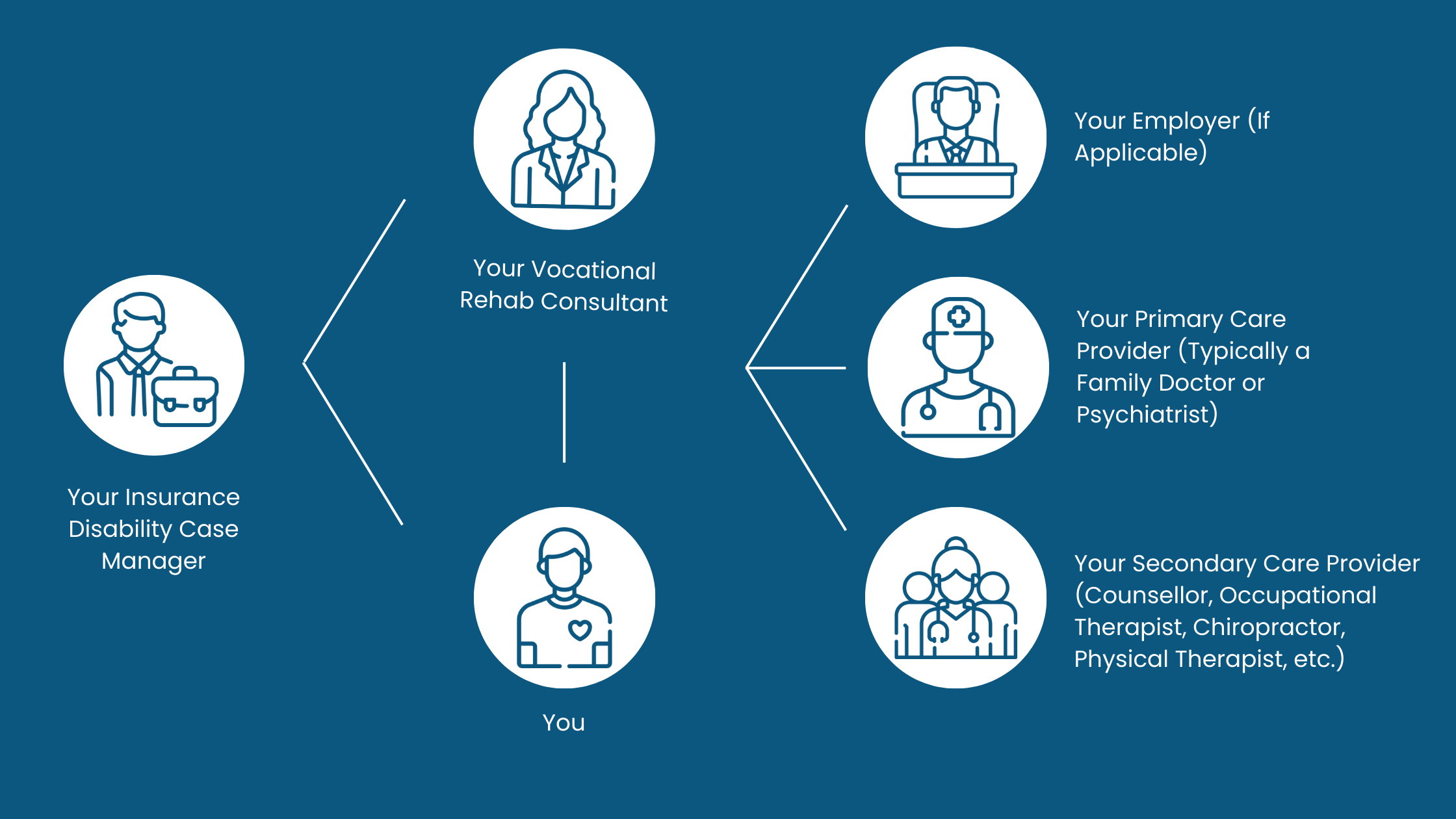
Vocational Rehab Consultants act as a mediator in your care, communicating with you, your disability case manager, your care providers, and employers to connect you with all the resources you need to return to work.
Who are the key players in Vocational Rehabilitation?
Insurance Disability Case Manager: Your disability case manager is a representative for your insurance agency. They manage your disability claim, refer you to vocational rehabilitation for further care, and approve funding for services, treatments, and programs.
Vocational Rehab Consultant (VRC): Your VRC is committed to providing you with the care, support, and resources you need to recover and eventually return to work. They communicate directly with your case manager to gain insights into your claim and discuss your care and treatment plan with your primary and secondary care providers. Your VRC will also communicate directly with you to learn more about your career interests and will advocate for your care every step of the way. They may also refer you for further assessments to better understand your current functioning, career interests, and ability to return to work (Assessments and Evaluations). Your VRC may refer you for other services such as physiotherapy, occupational therapy, job search training, or psychotherapy if they feel it will improve your recovery, ability to return to work, and overall well-being.
Your Employer (If Applicable): Your VRC may also discuss return to work options with your employer if there is a possibility of you returning to work (either in your same role, or in an alternative role) with the employer. If you are returning to work with your pre-injury employer, your VRC will discuss accommodations/timelines that can allow you to have a successful return to work and navigate which role would be best suited for your interests and current functionality.
Your Primary Care Provider: Primary care providers are healthcare professionals who serve as your main point of contact for medical needs, diagnoses, and routine/preventative care. Typically, a primary care provider is a family doctor or nurse practitioner, or, if you are strictly experiencing a mental illness or navigating changes in your mental health, your primary care provider could be a psychiatrist. They provide you and your VRC with a clear medical care plan and may recommend treatments or secondary care providers that can improve your symptoms and expedite recovery.
Your Secondary Care Providers: Secondary care providers are specialists who can contribute to an improvement in your symptoms and functionality, including occupational therapy, physical therapy, chiropractors, cardiologists, psychologists, therapists, neurologists, etc. Your VRC will typically arrange treatments for you, request funding from your disability case manager, and communicate the results of the secondary treatments with the rest of your care team.
What is Return-To-Work Planning?
If you’ve been off work for a while, the idea of going back can feel overwhelming. You might wonder where to start, how to manage your symptoms, or whether you can return to your old job at all.
In Vocational Rehabilitation (VR), RTW planning is the process of helping you prepare for and successfully transition back into the workforce. It’s not just about “getting back to work”, it’s about doing so in a way that supports your recovery, safety, and long-term well-being.
A return-to-work plan is personalized to your situation. It takes into account your health, your work abilities, your goals, and any restrictions or limitations you might have. The goal is to create a realistic path forward, whether that means returning to your previous job, exploring new types of work, or gradually increasing your hours and responsibilities over time.
What is the Return-To-Work Hierarchy?
The Return-To-Work Hierarchy is a helpful framework used by Vocational Rehabilitation Consultants to guide your return-to-work planning. The goal is to find the best possible fit between your skills, work history, interests, and current abilities so that your transition back to work feels realistic and sustainable.
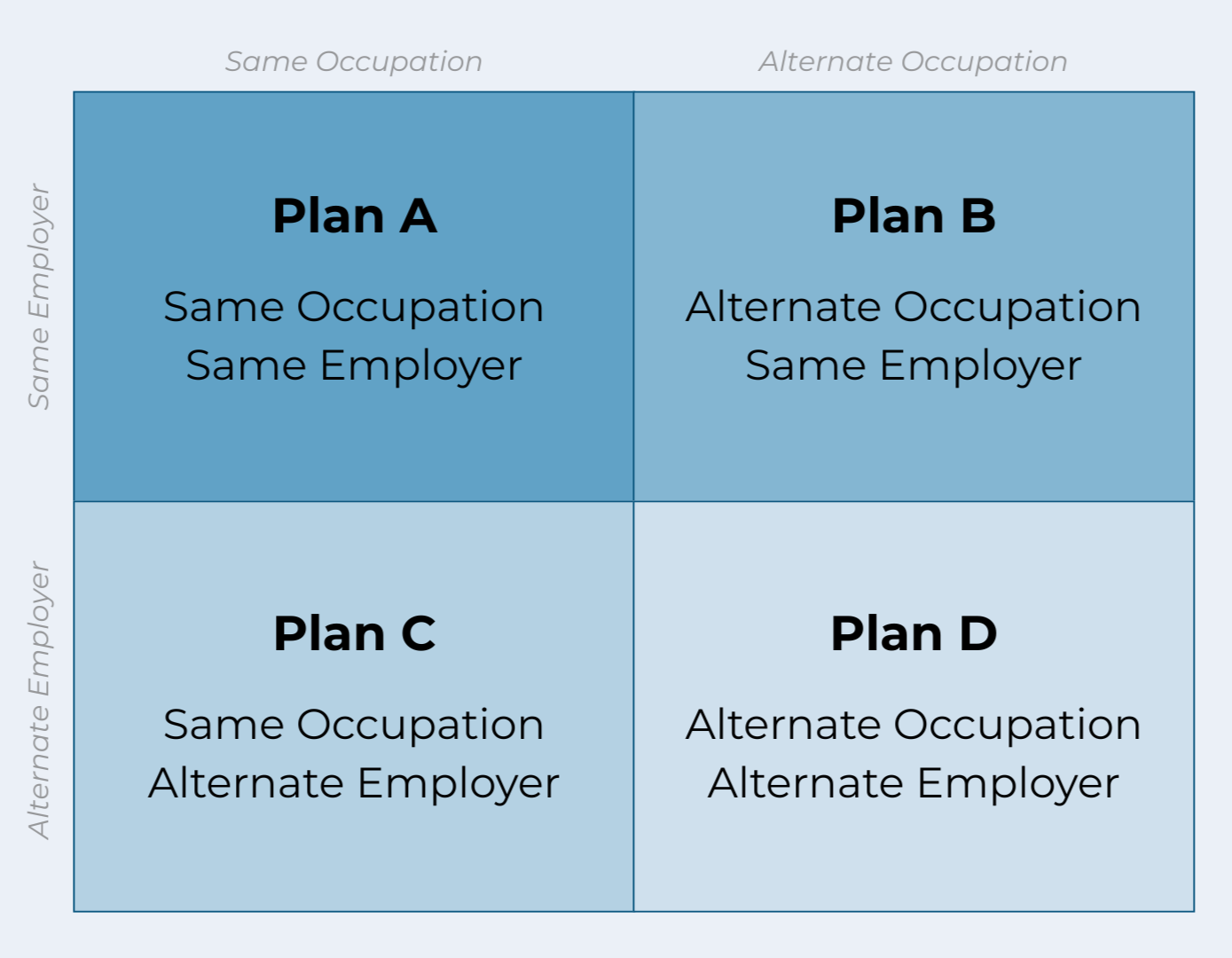
Plan A – Same Occupation, Same Employer
Plan A focuses on helping you return to the same occupation with your current employer. This is often the first and most desirable option, as it typically requires minimal retraining or orientation. You’re already familiar with the work environment, your duties, and the people you work with, which increases the likelihood of a successful and sustainable return.
Next steps for this plan include your Vocational Rehabilitation Consultant (VRC) working with your employer to identify any necessary accommodations and to develop a return-to-work plan that supports both your recovery goals and your employer’s operational needs.
Plan B – Alternate Occupation, Same Employer
Plan B involves returning to work in a different occupation with your current employer. This option is considered next because it allows you to maintain connection with your workplace, routines, and colleagues while transitioning into a role that better fits your current abilities.
Your VRC will collaborate with your employer to explore suitable alternate positions and create a tailored return-to-work plan for the new role.
For example, if returning to your previous position as a construction worker is not possible, you might explore a related role such as a construction estimator.
Plan C – Same Occupation, Alternate Employer
Plan C involves returning to the same type of occupation, but with a different employer. This option is typically explored when your original employer is unable to accommodate your return in any capacity.
In this case, your VRC will provide job search support to help you find similar employment opportunities elsewhere. This approach allows you to continue working in a familiar field that matches your skills and experience, while transitioning to a new workplace environment.
Plan D – Alternate Occupation, Alternate Employer
Plan D involves exploring a new occupation with a new employer. This is usually the final option, as it often requires retraining or additional assessments to identify suitable occupations that match your skills, interests, and current functional abilities.
Your VRC will guide you through vocational assessments and career exploration, followed by training and job search support to help you prepare for and secure employment in your new field.

Have questions for us? Click the button below to contact us, or contact your VRC directly!